
Being Seasonally Savvy: A Wintertime Tip
Let’s talk inchworms.
Wait…what does that have to do with feeding birds during winter? So glad you asked. It’s really a great story.
Believe it or not, inchworms are an important source of food for several of our winter birds.
Inchworms are the larvae, or caterpillars, of small geometrid moths. There are more than 1,400 species native to North America. These caterpillars overwinter in the bark and limbs of trees, as do other numerous insect larvae, pupae and eggs. All of them have an amazing ability to tolerate extreme cold while maintaining the spark of life that allows them to emerge undamaged next spring.
Over the eons, many of our winter birds learned to glean the trees in search of this frozen food supply that is high in the fats and protein they need to survive. It’s a behavior you have probably observed as you watched nuthatches, chickadees, kinglets, wrens and Brown Creepers explore every nook and cranny in the trees around your yard.
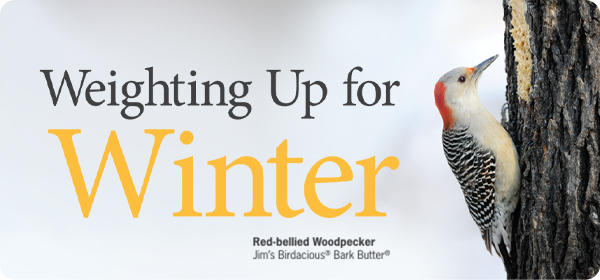
Enter Wild Birds Unlimited founder, Jim Carpenter. More than 30 years ago, he observed this foraging activity and set out to create a new bird food in the hope of attracting Brown Creepers to the trees in his yard. Working in his own kitchen, it took him nearly two decades to perfect the recipe and bring to market what is now known as Jim’s Birdacious® Bark Butter®.
Jim created Bark Butter as a “spreadable” suet that could be applied directly to the trunk of trees…and it soon became clear that it was a natural magnet for tree gleaning birds. Brown Creepers were not the only birds that loved it. Amazingly, over the past decade it has been documented to attracted more than 150 species of birds to our backyards
Providing high-energy, high-fat Bark Butter is hard to beat, especially during the winter. It is a great way to embrace the changing seasons and provide your birds with the best foods for their shifting nutritional needs. If critters are an issue in your yard, try offering Hot Pepper Bark Butter foods. Birds love them - critters not so much!
Your birds will love it, and besides, you may also be giving a cute little frozen inchworm a welcome reprieve to defrost next spring.
How to Prepare Your Yard for Winter
As fall rolls out and winter prepares to roll in, there are several ways you can prepare your yard to help your visiting birds during the coldest time of the year.
1. Take Stock of Feeders
During winter, birds need high calorie foods to keep their little bodies warm, especially during cold nights. Now is the perfect time to clean and repair your feeders and replace any that cannot be fixed.
Clean your feeders with warm, soapy water, and sanitize them with a 10% bleach solution. If you’re looking to replace a feeder, try a Wild Birds Unlimited EcoClean™ Feeder. These feeders are easy to clean (no bleach needed for sanitizing), and they feature a patented technology that inhibits the surface growth of damaging bacteria, mold and other microbes. This protection won’t wash or wear away, and it uses environmentally friendly technology.
2. Provide Shelter
Cold winds strip heat from birds very quickly. Birds will seek refuge from the wind in dense vegetation, natural cavities or roosting boxes. Roosting boxes provide birds with a warm, dry location that can help protect them from cold, nasty winter weather. Consider making a brush pile! Broken tree limbs, leaf piles -- even your Christmas tree -- can be used for shelter.
3. Offer Water
Birds need water in winter to maintain their feathers for effective insulation. Use a heated bird bath or add a heater to your existing concrete, plastic, metal or stone bird bath. This will help make some water available even on the coldest day. Some concrete baths with an added heater may not be able to handle freezing weather. To be safe, place a plastic bird bath dish with a heater on the existing pedestal.